

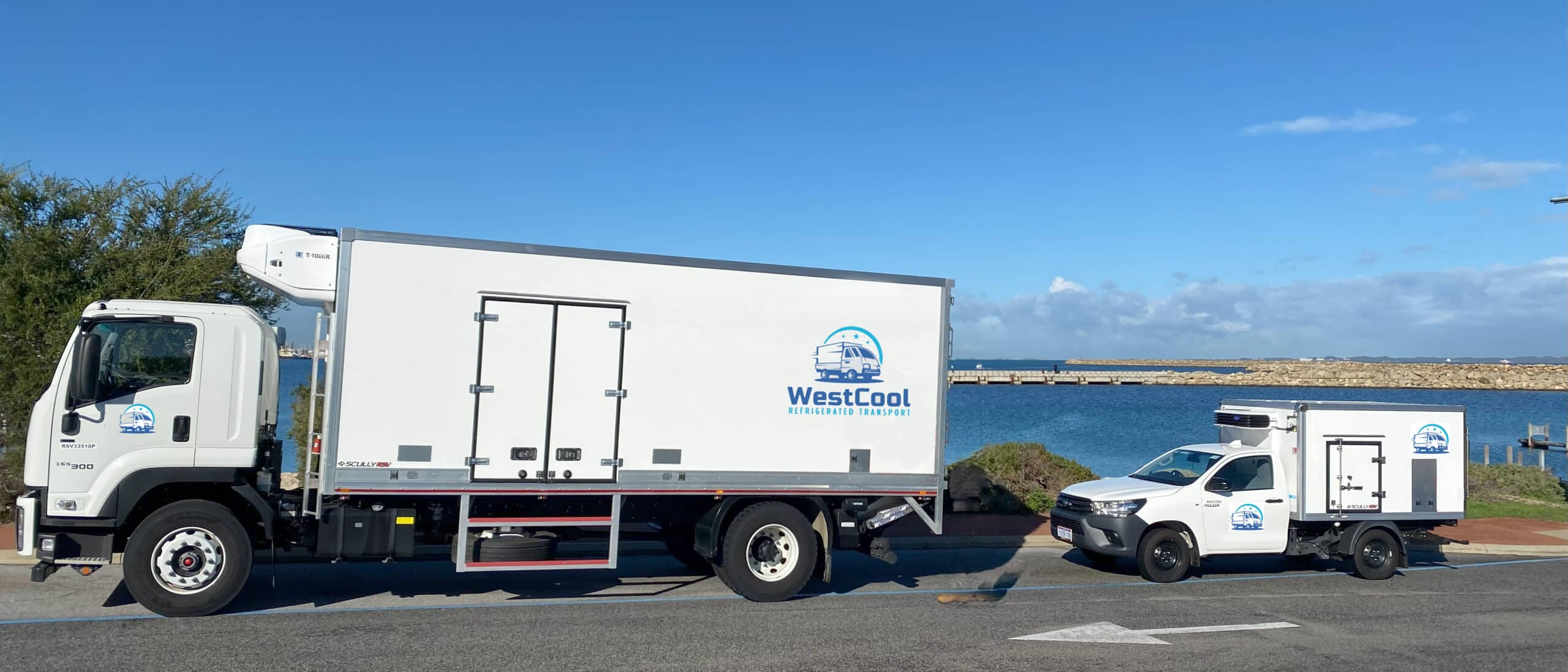
Why Is Refrigerated Transport in Western Australia Different?
Refrigerated transport in Western Australia is different because of the state’s enormous distances, extreme temperatures, regional locations and the challenges of providing reliable support when something goes wrong.
For businesses transporting temperature-sensitive freight, these factors can make temperature-controlled transport in WA considerably more demanding than a typical metropolitan delivery.
A refrigerated truck is only part of the solution. Reliable cold-chain transport depends on experienced drivers, quality vehicles, well-maintained refrigeration equipment, accurate temperature monitoring, contingency planning and appropriate goods-in-transit insurance.
This is particularly important when transporting pharmaceuticals, medical products, seafood, premium food and other freight where maintaining the required temperature is essential.
At WestCool Transport, we understand that transporting temperature-sensitive freight across Western Australia requires more than simply keeping a truck cold. It requires planning, experience and attention to detail throughout the journey.
Quick Summary
- Western Australia’s vast distances make refrigerated transport more challenging.
- High summer temperatures place additional demands on refrigeration equipment.
- Experienced, appropriately trained drivers are an important part of the cold chain.
- Refrigerated vehicles and refrigeration units need to be properly maintained.
- Data loggers provide visibility of temperatures during transport.
- Calibration certificates help demonstrate temperature-monitoring accuracy.
- Appropriate goods-in-transit insurance provides an additional layer of protection.
- Professional refrigerated transport should manage the whole transport risk, not simply provide a refrigerated vehicle.
How Does Western Australia’s Size Affect Refrigerated Transport?
Distance is one of the biggest factors affecting refrigerated freight in Western Australia.
Perth is separated from many regional centres by hundreds of kilometres, while some destinations are considerably further away. A refrigerated vehicle may therefore spend many hours travelling before the freight reaches its destination.
Long-distance transport introduces additional considerations, including:
- Extended refrigeration operating time
- Driver fatigue management
- Weather and road conditions
- Unexpected delays
- Vehicle and refrigeration reliability
- Breakdown response
- Availability of alternative transport
A problem that may be relatively straightforward to resolve in metropolitan Perth can become a much greater cold-chain risk in a remote regional location.
This is why refrigerated transport in regional WA requires careful planning before the vehicle even leaves Perth.
How Does the WA Climate Affect Refrigerated Freight?
Western Australia’s climate creates another important consideration.
Perth and many regional areas experience very high temperatures during summer. A refrigerated vehicle operating in these conditions is working against a significantly higher ambient temperature.
This makes the quality, condition and maintenance of the refrigeration unit particularly important.
Loading and unloading also matter. Freight can be exposed to warmer conditions when doors are open, loading takes longer than expected or goods are left waiting before being transferred.
Effective temperature-controlled transport therefore involves managing the entire process, not just the temperature inside the vehicle while it is travelling.
Why Does Driver Experience Matter?
The driver is an important part of the cold chain.
Experienced refrigerated transport drivers understand that temperature-sensitive freight requires more consideration than simply driving from one address to another.
Drivers need to understand:
- Required temperature ranges
- Appropriate loading procedures
- Minimising unnecessary door openings
- Protecting freight during loading and unloading
- Responding to delays
- Handling refrigeration or vehicle problems
Experience is particularly valuable on long-distance WA journeys. A driver familiar with regional routes understands the practical realities of travelling long distances and dealing with unexpected circumstances.
Appropriate driver training and experience can therefore be an important part of protecting temperature-sensitive freight.
What Should You Look for in a Refrigerated Transport Vehicle?
The condition and specification of the vehicle carrying your freight can have a significant impact on cold-chain reliability.
Businesses should consider more than whether a vehicle is simply advertised as “refrigerated”.
Important factors include:
- Condition of the insulated body
- Door seals and closures
- Refrigeration capacity
- Vehicle cleanliness
- Preventative maintenance
- Servicing history
- Suitability for the required temperature range
A properly maintained refrigerated vehicle provides a very different level of confidence from an older vehicle that is simply capable of producing cold air.
For temperature-sensitive freight, reliability and consistency are more important than simply achieving a low temperature.
Why Is Refrigeration Unit Maintenance Important?
The refrigeration unit must maintain the required temperature throughout the journey.
Like any mechanical system, it requires regular servicing and preventative maintenance. A well-maintained unit can help identify potential problems before they become failures.
This is particularly important during WA’s hotter months, when refrigeration equipment may be operating under greater load.
When selecting a refrigerated transport provider, it is reasonable to ask:
How often are the refrigeration units serviced and maintained?
The answer can tell you a great deal about an operator’s approach to reliability.
How Do Temperature Data Loggers Protect Refrigerated Freight?
Temperature data loggers provide additional visibility during refrigerated transport.
Rather than relying solely on the vehicle’s refrigeration display, a data logger can record temperature conditions throughout the journey, creating a record of the environment experienced by the freight.
This can help with:
- Monitoring temperature performance
- Identifying potential temperature excursions
- Providing greater visibility to customers
- Supporting quality-control procedures
- Demonstrating that temperature requirements were monitored
For high-value or sensitive freight, temperature monitoring should be an important part of the transport process.
Why Are Vehicle Calibration Certificates Important?
A vehicle temperature setting is only useful if its readings are reliable.
Calibration helps establish that temperature-monitoring equipment is measuring accurately against an appropriate reference.
A calibration certificate provides documented evidence that the vehicle equipment has been tested and its accuracy assessed.
This can be particularly important for pharmaceutical, medical and other temperature-sensitive freight where accurate temperature records may form part of a customer’s quality or compliance requirements.
When choosing a refrigerated transport provider, ask whether the vehicle equipment is calibrated, and if a certificate can be produced.
Is Goods-in-Transit Insurance Important?
Goods-in-transit insurance can provide an additional layer of protection while freight is being transported, particularly where goods are valuable, commercially important or difficult to replace.
However, businesses should understand that having insurance does not necessarily mean every type of loss is automatically covered.
Policies can differ in relation to:
- Coverage limits
- Excesses
- Exclusions
- Temperature-related losses
- Packaging requirements
- Conditions of carriage
Businesses transporting valuable or temperature-sensitive goods should ask their transport provider about its coverage and whether it is appropriate for the freight being transported.
Many refrigerated transport companies simply don’t have goods in transit insurance.
WestCool Transport automatically provides $1,000,000 of coverage for every consignment.
What Should You Ask a Refrigerated Transport Company in WA?
Before choosing a refrigerated transport provider, businesses should ask questions that go beyond price.
Drivers
- How experienced are your refrigerated transport drivers?
- What training do they receive?
Vehicles and refrigeration
- Are vehicles properly maintained?
- How frequently are refrigeration units serviced?
- Are they suitable for the required temperature range?
Temperature monitoring
- Are data loggers used?
- Are they calibrated?
- Can temperature records and calibration certificates be provided?
Breakdowns
- What happens if the vehicle or refrigeration unit fails?
- What contingency arrangements are available?
Insurance
- Does the company carry goods-in-transit insurance?
- What coverage limits and exclusions apply?
The answers can provide a much better indication of the quality of a refrigerated transport provider than price alone.
Why Does Experience Matter When Transporting Refrigerated Freight Across WA?
Temperature-controlled transport is ultimately about managing risk.
That risk isn’t confined to the refrigeration unit. It includes the driver, vehicle, refrigeration system, loading process, journey, temperature monitoring, potential delays, breakdown response and the value of the goods being transported.
Western Australia’s geography simply makes these risk considerations more significant.
A transport provider that understands the realities of operating across WA can plan accordingly and identify potential problems before they become disruptions.
At WestCool Transport, we focus on providing professional refrigerated transport solutions for businesses that need their temperature-sensitive freight handled reliably and professionally.
Refrigerated Transport in WA Is About Reliability & Risk Management, Not Just Refrigeration
Western Australia’s climate, geography and distances create challenges that make refrigerated transport different from a standard metropolitan delivery.
For temperature-sensitive freight, the refrigeration unit is only one part of the equation.
Driver experience, vehicle quality, refrigeration maintenance, temperature data logging, calibration, breakdown support and appropriate insurance all contribute to a reliable cold-chain transport solution.
Businesses choosing a refrigerated transport company in Western Australia should therefore look beyond the cheapest available rate and consider the level of protection and professionalism provided throughout the journey.
At WestCool Transport, we believe professional refrigerated transport should provide customers with confidence that their freight is being looked after from collection through to delivery.
Whether you require refrigerated transport in Perth, regional Western Australia or longer-distance temperature-controlled freight, WestCool Transport can help you plan a reliable solution for your requirements.
Looking for reliable refrigerated transport in Western Australia? Contact WestCool Transport to discuss your freight requirements.